Interview vs Teleprompter Video: How to Choose the Right Production Style
You've cleared the budget. You've picked the subject. The day is blocked on the calendar. Then your production partner asks a question that catches you off guard: "Are we doing interview style or teleprompter?"
For most marketing leaders, this is the first real production decision of the project, and it shapes almost everything that comes after. Script timeline. Talent comfort. On-set logistics. Edit pace. The final tone the audience walks away with. The video you imagine in your head is almost always one style or the other, even if you haven't named it yet.
This guide walks through both approaches the way we walk a client through them on a discovery call. When each one wins. When each one fails. And a third option most vendors never mention.
The Interview Style
In an interview-style shoot, there's no script. Your subject sits across from an interviewer (usually the producer), and we capture a real conversation. The subject answers questions in their own words. Their eyes move to the interviewer, not the lens. In the edit, we remove the questions and weave the subject's answers into a coherent story.
When it wins
Interview style is the right choice when the goal is credibility, authenticity, or emotional resonance. It works best with subjects who know their material cold and who get more natural the longer they talk. A cardiologist explaining how a new device changed her patient outcomes. A program director at a nonprofit talking about why she started this work. An engineer walking through how his team solved a regulatory problem. These people don't need a script. They need a good interviewer asking the right questions.
It also works when you don't yet know the exact story you want to tell. Interview style gives you raw material. A skilled producer pulls three or four narrative threads from a single conversation, and the edit shapes the final message. That flexibility is a major advantage when the topic is rich and the subject is genuinely expert.
Industries where interview style tends to outperform
Medical device: Subject matter experts (clinicians, biomedical engineers) almost always sound more credible answering questions than reading a script. Their authority depends on sounding like themselves.
Aerospace and engineering: Technical professionals often warm up over the course of a conversation. The first take is stiff. The fifth answer is gold.
Healthcare: Patient stories, surgeon perspectives, and clinician testimonials live or die on authenticity. A teleprompter kills both.
Nonprofit beneficiary and staff stories: The whole point is that it's real. Reading from a prompter undermines that the moment a viewer senses it.
Founder and culture content: Origin stories should sound like the person remembering, not reciting.
What you trade
The trade-off is control. You don't know exactly what your subject will say, which makes legal, compliance, and brand-tight messaging harder. If your industry has heavy regulatory review (FDA-cleared device claims, financial services disclosures, nuclear regulatory language), interview style may not survive your compliance team's red pen, because every spontaneous phrase becomes another item to vet.
Interviews also run longer in production. A 90-second final video can require 45 minutes of recorded conversation, sometimes more. That's a longer shoot day and a longer edit.
A real example
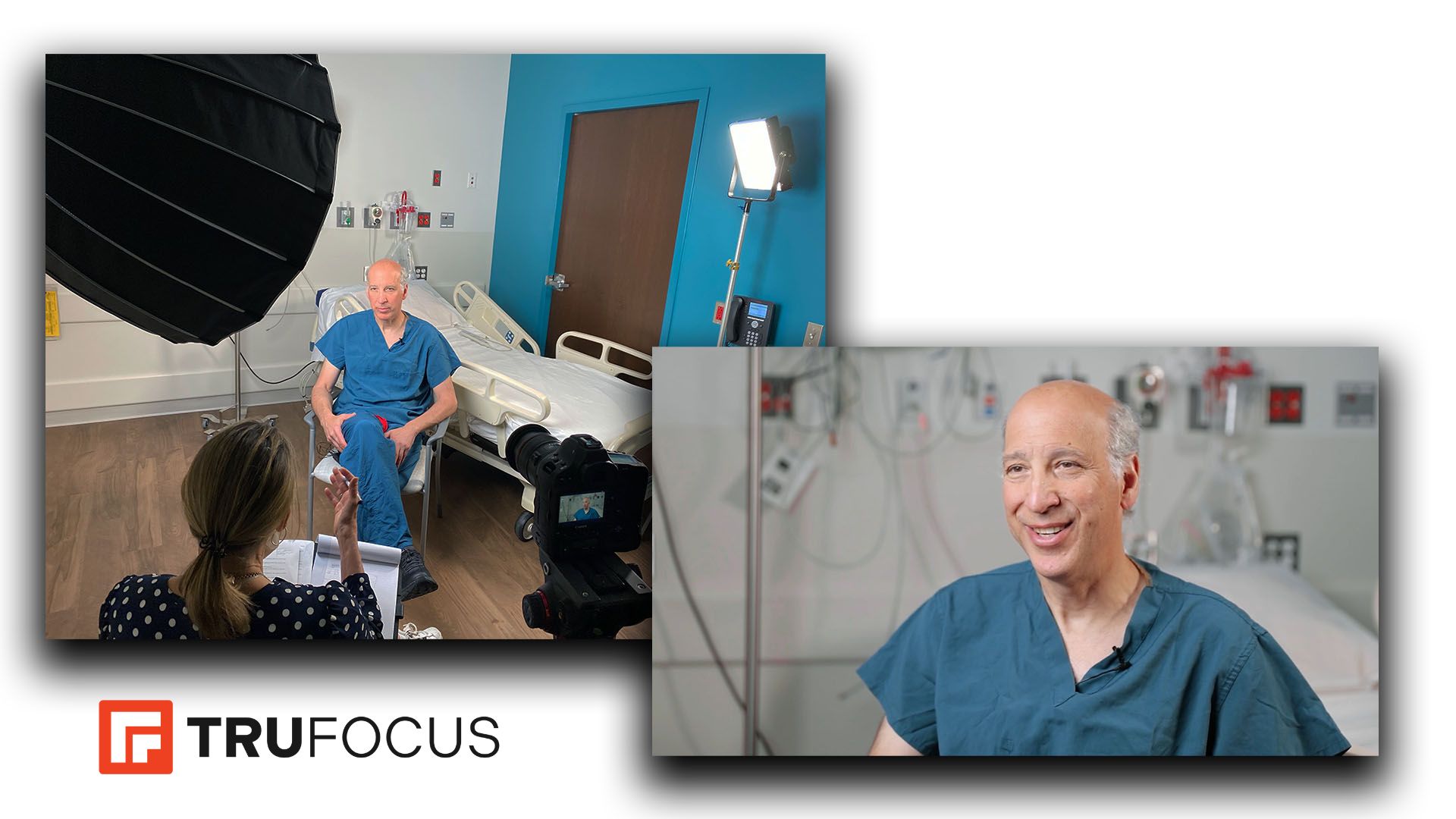
We filmed Dr. Berger in a hospital setting on a recent project. He never once looked at the camera. He was so deep in the conversation he forgot it was there. By the end of the session, he had given us five different framings of his expertise, any of which could have anchored the video. That's the upside of interview style when the subject is the right fit for it.
TruFocus interview-style video sample featuring Dr. Berger in a hospital setting
Watch how Dr. Berger's eyes never go to the camera. The result is a natural, credible delivery that feels like overhearing an expert in his element.
The Teleprompter Style
In a teleprompter shoot, the script is reflected onto glass mounted in front of the camera lens. The subject reads the script while looking directly into the camera. Done well, the audience can't tell a script exists. The speaker appears to be talking right to them.
When it wins
Teleprompter style is the right choice when the messaging must be precise, the timing must be tight, or the speaker isn't going to give you a usable answer off the cuff. Executive announcements. Regulated product claims. Annual fund appeals where every word has been approved by the board. Brand campaigns where the tagline lands at exactly 17 seconds.
It's also the right choice when the speaker is the face of the company but isn't a natural on-camera storyteller. Many CEOs are excellent leaders and uncomfortable improvisers. A teleprompter lets them be presidential without asking them to be performers.
Industries where teleprompter style tends to outperform
Financial services and wealth management: Disclosure language, compliance-reviewed scripts, and brand-controlled messaging benefit from a precise read.
Pharmaceutical and life sciences: Where claims must match approved labeling word for word, there is no other option.
Nuclear energy and utilities: Safety messaging, public communications, and regulatory updates require exact language.
Executive and CEO communications: Annual addresses, investor updates, all-hands openings.
Brand and campaign work: When a line has to land in a specific cadence to match the cut.
Nonprofit fundraising appeals: When the executive director has 90 seconds to make an ask that has been reviewed by the board, the development committee, and marketing.
What you trade
The trade-off is authenticity. Teleprompter delivery, even from skilled readers, has a tell. The eyes move differently. The cadence flattens. The audience can't always name what feels off, but they sense it. Top-tier on-camera talent overcome this with practice. Most subject matter experts and busy executives don't have the reps, and it shows.
You also pay for the script up front. There's no way to "see what they say." Every word has to be written, reviewed, and rehearsed before the shoot day. For complex industries with multiple approval layers, this can add two to four weeks to the timeline.
A real example
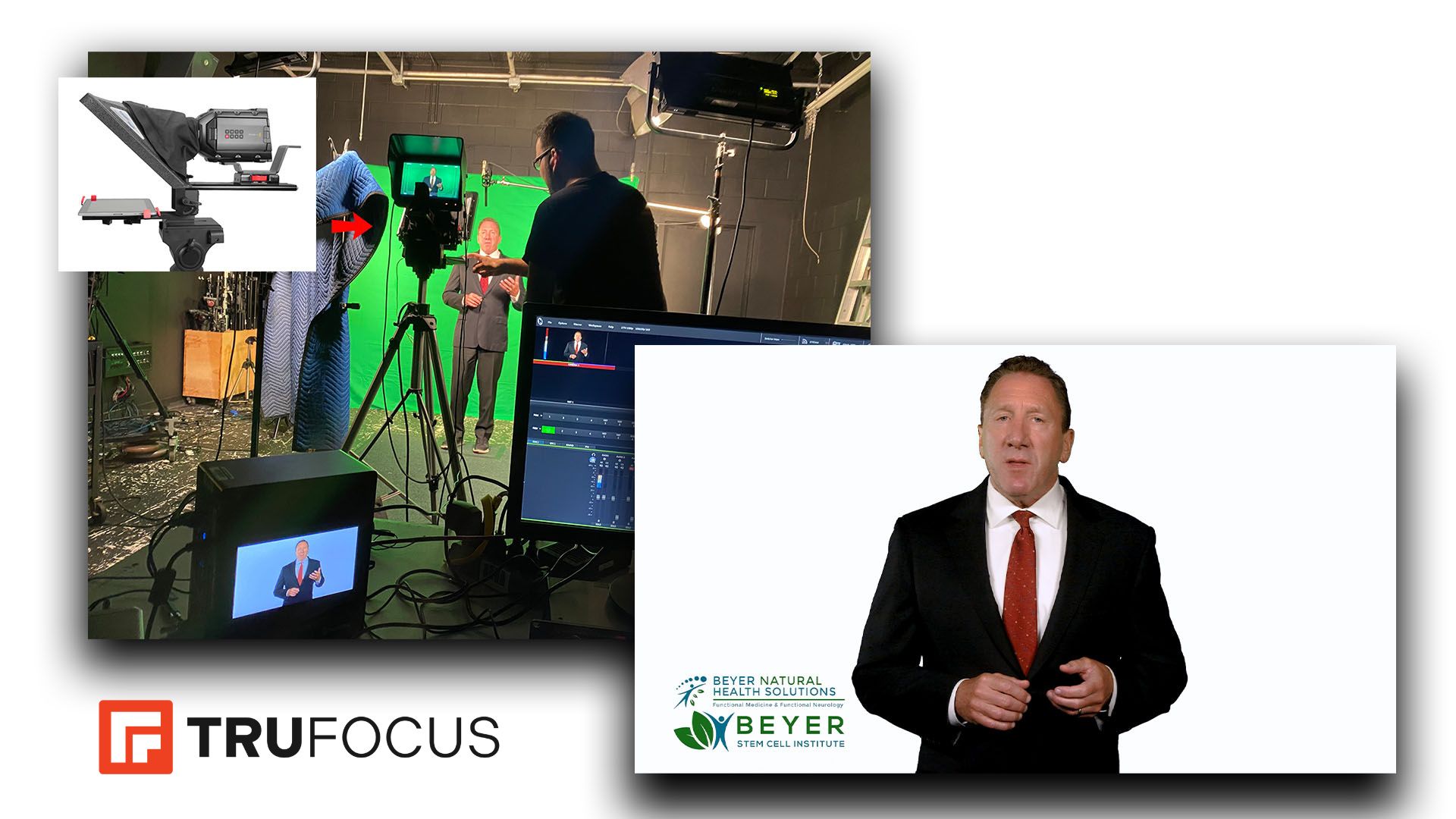
We filmed Dr. Beyer of Beyer Natural Health Solutions in a studio against a clean white background. He looks directly at the camera the entire time. He moves his hands when he wants to emphasize something. The viewer feels personally addressed. That's the upside of teleprompter style when the script is well written and the speaker has been coached.
TruFocus teleprompter-style video sample featuring Dr. Beyer in a studio setting
Watch how Dr. Beyer maintains direct eye contact throughout. The polished, deliberate delivery is the signature strength of teleprompter style.
The Hybrid Approach (The Option Most Vendors Don't Mention)
In our experience, the strongest B2B videos rarely use one style for the full runtime. They use both, intentionally.
A typical hybrid structure:
Open with the executive on teleprompter to frame the message in brand-approved language ("At Acme Aerospace, we believe...")
Cut to interview-style commentary from engineers, customers, or program leads who bring credibility through their own voice
Close with the executive again on teleprompter, calling the viewer to a specific action
This structure gives you tight control on the bookends (where compliance and brand matter most) and authentic credibility through the middle (where the proof lives). It's how we structure most testimonial videos for medical device clients, most executive messages for nonprofit galas, and most thought leadership pieces for financial services firms.
The hybrid approach requires both production setups in the same shoot day, which costs slightly more in pre-production and adds rigor to the run-of-show. The payoff is a finished video that does what neither pure style can do alone.
A Decision Framework
If you aren't sure which style fits your project, work through these five questions before your kickoff call:
How comfortable is your subject on camera? If the honest answer is "not very," lean teleprompter unless the subject is also an exceptional improviser on their topic.
How tight is the messaging? If legal, regulatory, or board approval governs the language, lean teleprompter. If you want the words to feel found in the moment, lean interview.
What outcome do you want the viewer to feel? Authority and authenticity favor interview. Polish and precision favor teleprompter.
How much prep time do you have? Teleprompter requires a fully written, fully approved script before the shoot. Interview requires a question guide. The first is heavier.
Where will the video live? A LinkedIn thought leadership clip can lean interview. A gala open or a national broadcast spot usually benefits from teleprompter precision.
If two or more of those answers point in opposite directions, that's usually a sign you should consider hybrid.
Common Mistakes to Avoid
A few patterns we see consistently:
Defaulting to teleprompter because it feels safer. Teleprompter feels low-risk to marketing teams because the words are pre-approved. But a stiff teleprompter read is more damaging than a slightly imperfect interview. Audiences forgive a stumble. They don't forgive a robot.
Trying interview style with an uncomfortable subject. If your CEO has told you twice that he hates being on camera, interview style won't save him. He needs a script, coaching, and probably multiple takes. Don't make him improvise.
Writing teleprompter scripts in corporate written English. People don't speak the way executive summaries are written. If your script has the word "leverage" in it twice, rewrite it for the ear. Read every line out loud. Cut anything you wouldn't actually say to a colleague over coffee.
Underestimating retake counts. Interview style typically requires 30 to 60 minutes of conversation per minute of finished video. Teleprompter typically requires 6 to 10 takes of each script section. Both add up. Plan the shoot day accordingly.
The Bottom Line
There is no universally better style. There is only the right style for this subject, this message, this audience, and this regulatory environment.
For most B2B work in complex industries, the answer is usually interview-led for the proof, teleprompter for the bookends, and a producer who knows when to bend the rules.
If you're in the middle of planning a video and you aren't sure which style fits, we'd rather talk it through with you before the shoot than fix it in the edit. Reach out and we'll walk through your specific subject, message, and timeline on a 20-minute call.